The Encyclopedia of Wooden Toy Safety, Materials & Sustainability for Indian Homes
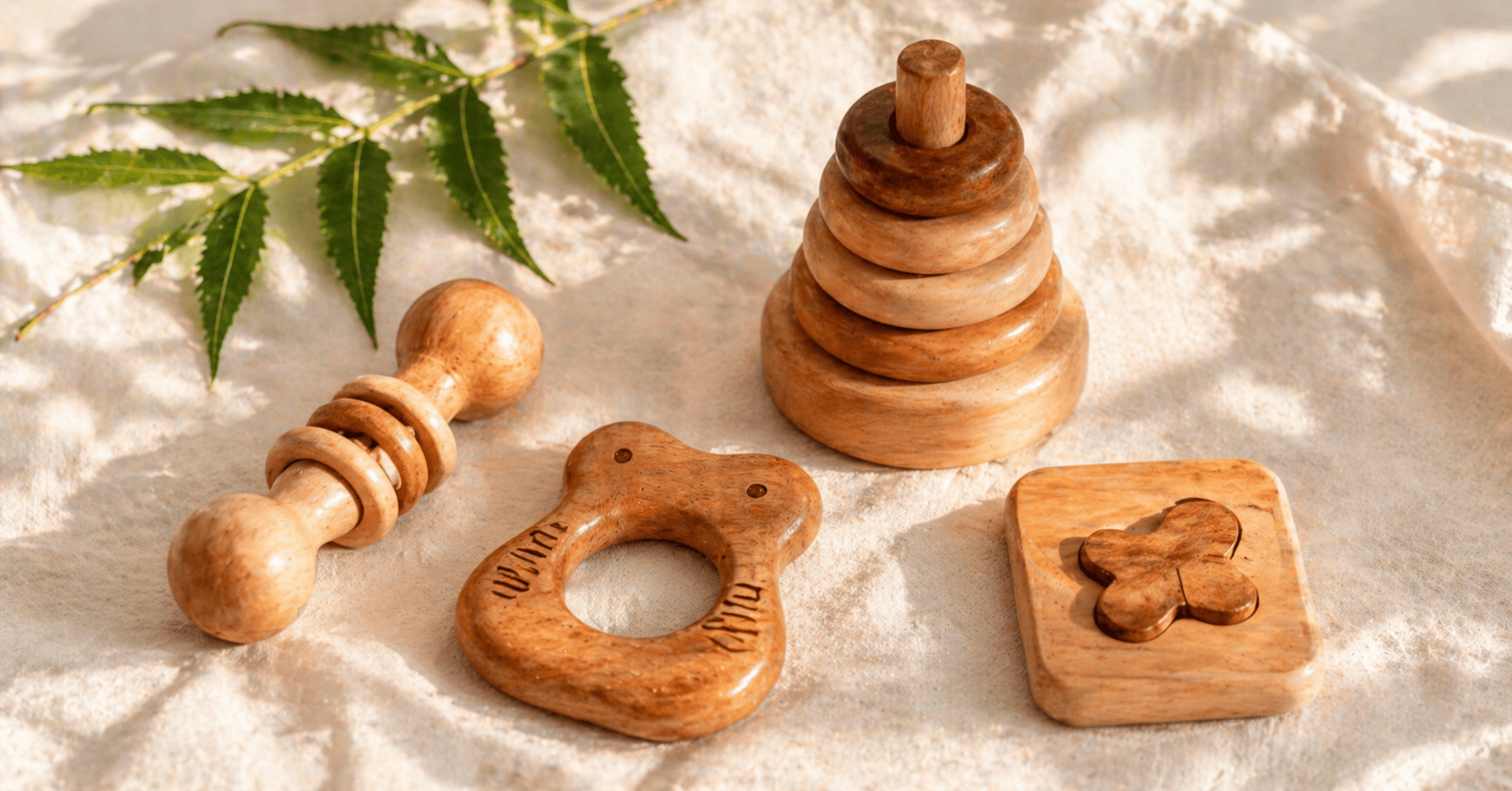
A note from our team before you read: This guide was born out of a real conversation. A mother from Kochi emailed us asking why her brand-new neem wood rattle developed black spots within three weeks of purchase. She had stored it in an airtight container during the monsoon — following advice she had read on another toy website. The toy was not defective. The storage was wrong. That email made us realise that Indian parents are not being given India-specific advice. Everything we read about wooden toy safety is written for European or American homes. This guide is different. It is written for the Mumbai apartment, the Delhi summer, the Chennai humidity, and the Bangalore monsoon. Every recommendation here is grounded in material science, verified BIS regulations, and real feedback from Indian families.
Why "Wooden" is Not a Safety Guarantee
Walk into any Indian toy store today and you will see the word "wooden" used as a synonym for "safe," "natural," and "Montessori." It has become a marketing shield that hides enormous variation in quality. A ₹200 wooden rattle from a street vendor and a ₹1,200 neem wood rattle from a certified manufacturer are both "wooden toys." But they are as different as tap water and filtered water.
The truth is that wood is a complex biological material. It is porous. It breathes. It expands in humidity and contracts in dry heat. It reacts differently to finishing chemicals depending on its density. And in India, where a single family might experience 90% monsoon humidity in June and 10% desert dryness in May, the choice of wood — and how it is finished, certified, and maintained — is a genuine safety decision.
This guide will give you the science, the regulation, and the practical knowledge to make that decision confidently.
PART ONE: The Anatomy of Wood — Why Species Matters More Than You Think
1.1 The Indigenous Champion: Neem (Azadirachta indica)
If there is one wood that was made for the Indian nursery, it is neem.
Neem has co-evolved with the Indian subcontinent for thousands of years. Its cellular structure contains bioactive compounds — primarily nimbin, nimbidin, and azadirachtin — that give it natural antibacterial and antifungal properties. Research published on the National Center for Biotechnology Information (NCBI) confirms that neem extracts demonstrate measurable efficacy against both gram-positive and gram-negative bacteria, as well as common fungal pathogens like Candida albicans.
What this means practically for your baby:
When a six-month-old mouths a neem wood teether — which will happen approximately four hundred times a day — the wood is not just passively sitting there. It is actively resisting the bacterial colonies that accumulate in saliva. This is not a marketing claim. It is plant biology.
Neem is also a medium-density wood, which gives it an important physical property for teethers and rattles: it is soft enough to be gentle on inflamed gums during teething, but hard enough to resist splintering under the pressure of emerging teeth. This combination is rare. Most soft woods splinter too easily, and most hard woods are too rigid for a tender gum.
Climate performance: Neem is naturally resistant to mold, moisture absorption, and — critically — termites. In our experience answering customer queries, neem toys consistently outperform other wood types in coastal regions. The mother from Kochi whose rattle developed black spots? Her toy was rubberwood, not neem. When she switched to a neem wood rattle, the problem did not recur even through the following monsoon season.
Brands using neem: AriroToys is the primary Indian brand that has built its product line specifically around neem wood, particularly for the infant stage (0–18 months).
1.2 The Sustainable Workhorse: Rubberwood (Hevea brasiliensis)
Rubberwood is the most misunderstood wood in the Indian toy market. Parents either dismiss it as "cheap" or assume it is "rubber" — as in synthetic. Neither is accurate.
Rubberwood is harvested from rubber plantation trees that have completed their latex-producing lifecycle, usually after 25 to 30 years of service. Using this wood is genuinely eco-conscious — it gives a second life to trees that would otherwise be burned or left to decompose. Brands like Shumee and PlanToys have built their sustainability credentials on this foundation, and it is a legitimate one.
Physical properties: Rubberwood has a dense, tight grain that makes it resistant to splintering. It takes paint and stain well, which is why rubberwood toys often have vibrant, consistent colour. It is also relatively lightweight, which makes it practical for large play items like Pikler triangles and kitchen sets.
The honest limitation: Rubberwood is a "thirsty" wood. It absorbs environmental moisture more readily than neem or teak. In high-humidity environments — Mumbai, Chennai, Kochi, Kolkata — rubberwood toys left in damp storage can develop surface mould within weeks. This is not a manufacturing defect. It is a material property that requires specific care in the Indian monsoon climate.
Our honest recommendation: Rubberwood is an excellent choice for children aged 18 months and above, where toys are handled rather than mouthed, and where the larger variety of products available in rubberwood gives parents more developmental options. For the teething infant stage, neem remains our preference for coastal families.
1.3 The Premium Imports: Beech and Maple
European brands like Hape and Grimm's rely primarily on beech and maple, and there are good reasons for this.
Beech wood is extremely dense and heavy. Its grain is so tight and uniform that there is virtually zero risk of grain lift — the phenomenon where wood fibres rise to create a rough, potentially splinter-producing surface. Beech is the wood that German and Swiss toy makers have trusted for generations, and its safety record in European conditions is impeccable.
Maple is the gold standard for food-safe wood applications. It is so dense and non-porous that it is the material of choice for high-end kitchen cutting boards. Maple toys provide a naturally smooth surface that is exceptionally resistant to bacterial penetration.
The Indian reality check: Both beech and maple are excellent woods, but they were not designed for the Indian climate. They are accustomed to European conditions — moderate humidity, mild summers, cold winters. In the extreme dry heat of a Delhi summer at 45°C, unseasoned beech wood can develop fine cracks called "checking" as it loses cellular moisture rapidly. In the tropical humidity of Chennai, beech toys need more frequent oiling than in their native climate.
This does not make beech and maple toys unsafe for India. It makes them maintenance-intensive. If you invest in a Hape product — and it is a genuine investment, given the price point — be prepared to oil it every four months rather than every six, and store it away from direct air conditioning vents, which create exactly the kind of rapid temperature change that causes checking.
1.4 The Traditional Giants: Sheesham, Teak, and Rosewood
These woods appear most often in larger play items — Pikler triangles, balance boards, and furniture — rather than small handheld toys.
Sheesham (Indian Rosewood) is one of the most structurally sound woods available in India. It contains natural resins that make it deeply unpalatable to termites and wood-boring insects. Its density makes it ideal for gross motor toys that need to support the full weight of a toddler — a Pikler triangle made from sheesham will safely bear a 25 kg child without flexing.
Teak is the classic Indian wood for anything that needs to resist water. Its natural oil content repels moisture at a cellular level, making it the best-performing wood in coastal humidity. Teak toys are rare because teak is expensive and often subject to sourcing restrictions, but when you find them, they are virtually indestructible in Indian conditions.
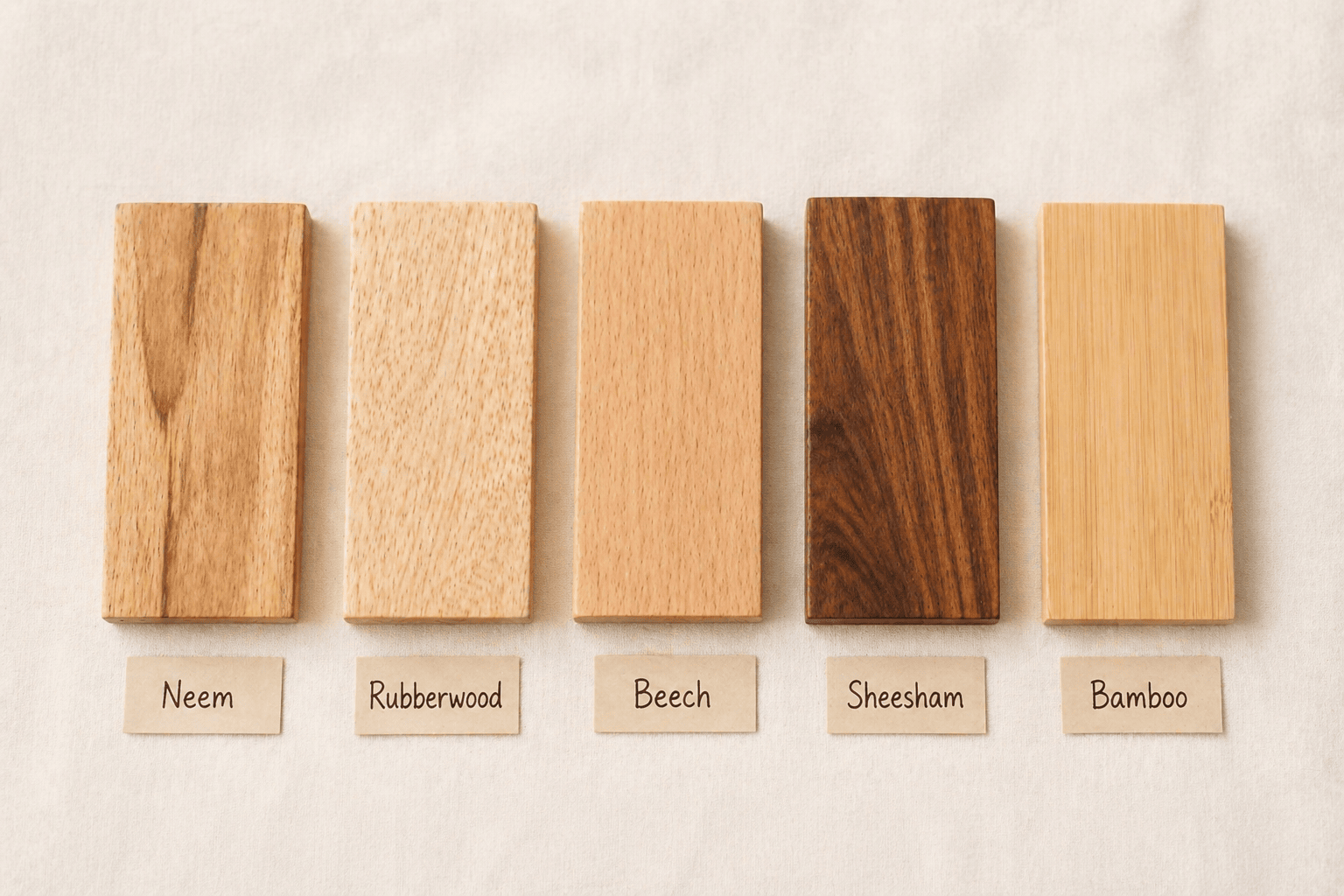
1.5 The Special Case: Bamboo
Bamboo is technically a grass, not a wood. But it appears in the wooden toy market frequently enough to deserve mention — and a warning.
High-quality carbonised bamboo is lightweight, sustainable, and genuinely durable. The carbonisation process involves heating the bamboo to high temperatures, which kills any insects or eggs inside, removes moisture, and darkens the material to a warm honey colour.
Low-quality bamboo toys, however, can delaminate — the layers peel apart — which creates large, sharp-edged fragments that are a serious hazard for young children. The delamination risk increases dramatically in Indian humidity.
Our recommendation: Only buy bamboo toys from brands that explicitly state they use carbonised bamboo and carry BIS certification. If a bamboo toy has no certification and costs under ₹400, avoid it for children under three years.
PART TWO: The Indian Climate Map — Your Location Determines Your Choice
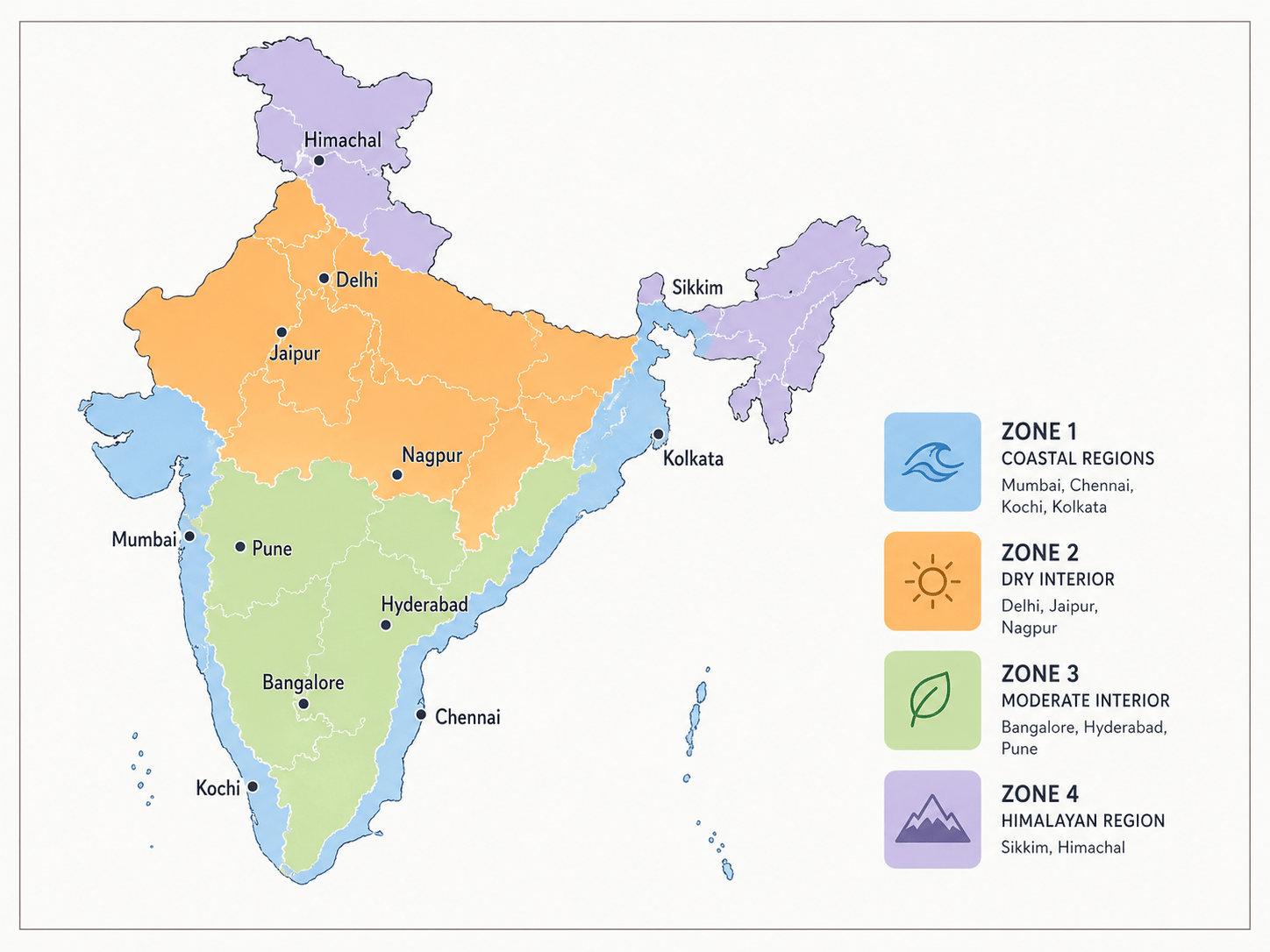
This is the section that most toy guides skip entirely. Your city's climate should be one of the primary factors in choosing a wooden toy.
| Region | Climate Challenge | Best Wood Choice | Wood to Avoid |
|---|---|---|---|
| Coastal High Humidity (Mumbai, Chennai, Kochi, Kolkata, Goa) | 80%+ humidity for 4–6 months, mould risk | Neem (antifungal), Teak (water resistant), Sheesham | Pine (absorbs water rapidly), Untreated bamboo, Unseasoned rubberwood |
| Dry Interior and Desert (Delhi, Jaipur, Nagpur, Ahmedabad) | 40°C+ dry heat, cracking and joint loosening risk | Beech, Maple, Sheesham (dense, stable structures) | Soft pine (dries out and becomes brittle), Thin bamboo |
| Humid Interior (Bangalore, Hyderabad, Pune) | Moderate humidity, occasional extreme heat | Rubberwood, Neem | Poorly finished pine |
| Himalayan and Hill Stations (Sikkim, Himachal, Uttarakhand) | Cold and damp, wood expansion risk | Rubberwood, Neem | Cheap plywood (layers separate in cold dampness) |
The Mumbai Monsoon Problem — Explained by Science
In a high-humidity environment, wood cells absorb moisture from the air and expand. If a toy is made from pine or low-quality rubberwood with a thin surface finish, this expansion causes something called grain raise. The surface of the toy, which felt smooth in the shop, becomes rough like sandpaper. You can feel it with your fingertip.
Grain raise is not just an aesthetic problem. In its early stages, it creates micro-splinters — fibres that are invisible to the eye but sharp enough to irritate a baby's soft mouth tissue. This is why Mumbai and Chennai parents consistently report more surface quality issues with imported toys than with neem-based Indian toys. The toys were not manufactured poorly. They were manufactured for a different climate.
The solution for coastal families: For any toy that your infant will mouth — teethers, rattles, wooden rings — choose neem or teak with a factory-applied linseed oil finish. For toys that are handled rather than mouthed — puzzles, stackers, building blocks — rubberwood is perfectly safe with proper monsoon storage (more on this in Part Four).
The Delhi Dry Heat Problem — Explained by Science
In 45°C heat with low humidity, wood loses its cellular moisture rapidly. If the wood was not kiln-dried (artificially dried in a controlled oven) before manufacturing, it will shrink as it desiccates. This shrinkage is dangerous in a specific way: it causes joints to loosen.
A walker handle that was perfectly stable in January can develop a subtle wobble by June — not because the wood broke, but because it shrank away from the joint. With a heavy toddler leaning their full weight on that handle, a loose joint is a real safety risk.
The solution for Delhi and Rajasthan families: Look specifically for toys that mention kiln-dried wood and mortise-and-tenon joinery rather than glue-only joints. Mortise and tenon joinery — where one piece of wood slots into a carved pocket in another — maintains structural integrity even as wood expands and contracts with seasonal temperature changes. Brands like AriroToys and Hape use this joinery method in their larger gross motor toys.
PART THREE: The Chemistry of Finishing — What Is Actually Touching Your Baby's Skin
The wood is the structure. The finish is the skin. A toy made from the finest neem wood can be rendered unsafe by a cheap solvent-based lacquer. And conversely, a rubberwood toy with a food-grade linseed oil finish is genuinely safe for a mouthing infant.
Understanding the finish is the most underrated safety skill an Indian parent can develop.
3.1 Factory Finishes: What the Brand Applies at Manufacturing
Linseed Oil — The Industry Gold Standard
Linseed oil is derived from flaxseeds and is the most widely used food-safe finish in quality wooden toy manufacturing. What makes it special is that it is a polymerising oil — meaning it chemically reacts with oxygen to transform from a liquid into a solid, flexible film inside the wood fibres. It does not sit on top of the wood. It becomes part of the wood.
For Indian conditions, linseed oil has an important additional advantage: it handles temperature swings exceptionally well. It does not become sticky in Chennai humidity or brittle in Delhi heat. This is why AriroToys uses linseed oil as their primary finish.
Walnut Oil and Tung Oil — Premium Organic Alternatives
These oils provide a beautiful, deep finish with superior water resistance — ideal for coastal environments. However, Indian parents with infants should be aware of one specific risk: walnut oil, even in processed form, can trigger reactions in households with nut allergies. Most paediatric occupational therapists recommend confirming there are no nut allergies in the household before using walnut-finished toys for children under two years.
Water-Based Stains — The Colouring Choice
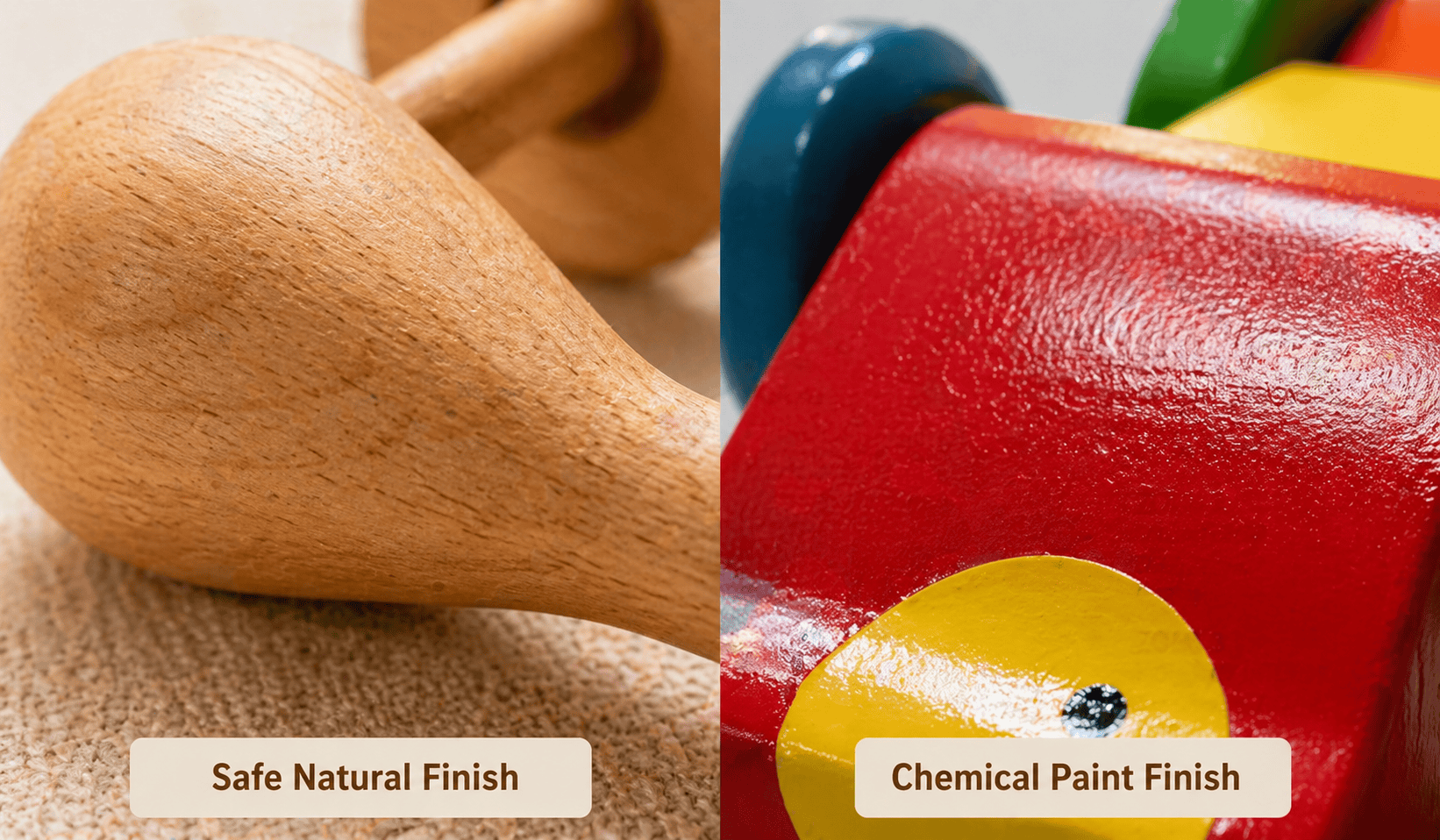
For toys that have colour, the staining method matters enormously. Water-based stains penetrate the wood fibres rather than sitting on top as a paint layer. This has two critical advantages. First, they contain no VOCs (volatile organic compounds) — the toxic gases that off-gas from solvent-based paints into enclosed nursery air. Second, they move with the wood as it expands and contracts in Indian seasonal changes, rather than chipping or flaking as oil-based paints do.
When you see a brightly coloured wooden toy and it passes the scratch test — firm rubbing with a fingernail releases no colour — it is almost certainly finished with a water-based stain.
3.2 The VOC Problem in Indian Apartments
This is a safety issue that almost no Indian toy guide discusses, and it is particularly relevant to modern urban Indian living.
Volatile organic compounds are chemicals that evaporate at room temperature, releasing gas into the surrounding air. When you open a new toy box and smell something sharp, chemical, or paint-like, you are inhaling VOCs.
In a well-ventilated European home, low levels of VOC off-gassing disperse relatively quickly. But in a modern Indian apartment — sealed for air conditioning through April to September, or sealed against winter smog in Delhi — those gases accumulate. Infants and toddlers have respiratory rates two to three times higher than adults and developing lung tissue that is more vulnerable to chemical irritation. Prolonged exposure to VOCs in enclosed spaces is associated with increased risk of childhood respiratory sensitivities and asthma.
How to check: Open the toy box and smell it. A safe, naturally finished toy smells like nothing, or faintly like linseed oil or the wood itself — a mild, earthy, warm scent. A toy with a problematic finish smells like a paint shop, a new car interior, or harsh chemicals. Trust your nose. It is a remarkably sensitive instrument for this purpose.
3.3 Phthalates: The Hidden Danger in Painted Wooden Toys
Most parents associate phthalates with plastic toys. This is a dangerous assumption.
Phthalates are plasticising chemicals added to paint and lacquer formulations to make the film more flexible — preventing it from cracking as the wood expands and contracts. In the Indian market, where cheap wooden toys undergo significant dimensional changes through the monsoon season, unscrupulous manufacturers add phthalates to their paints specifically to prevent visible cracking.
Phthalates are endocrine disruptors. When a baby chews on a brightly painted, uncertified wooden toy — and babies will chew on everything — they are potentially ingesting these chemicals through the paint. BIS IS 9873 Part 3 specifically tests for phthalate migration, which is one of the core reasons BIS certification is non-negotiable rather than optional.
3.4 Heavy Metals: The Artisan Toy Risk
India has a magnificent tradition of handcrafted wooden toys. The lacquerware toys of Channapatna in Karnataka and the painted toys of Kondapalli in Andhra Pradesh are genuine cultural treasures, with designs that have been passed down through generations of craftspeople.
But "traditional" and "tested" are not the same thing.
Many small artisans continue to use traditional dye formulations that have not been tested for heavy metal content. Some traditional red and yellow pigments historically contained lead compounds. Most artisans are not aware of this — they are using recipes passed down from their grandparents, from a time before heavy metal toxicology was understood.
This is not a condemnation of artisan toys. They are beautiful objects that connect children to Indian cultural heritage. Our recommendation is this: artisan toys make wonderful display items, decorations, and gifts for older children who do not mouth objects. For active play with infants and toddlers who will put everything in their mouths, only use toys from brands that provide third-party laboratory test results confirming the absence of heavy metals.
3.5 The Visual Finish Audit — What to Look for Without a Lab
| Feature | Safe Natural Finish | Warning Chemical Finish |
|---|---|---|
| Texture | You can feel the wood grain. The surface feels warm and slightly textured. | Feels glassy or plastic-like. Cold to the touch. |
| Smell | No smell, or faint earthy/linseed oil scent. | Sharp chemical, paint, or solvent smell. |
| Colour appearance | Colour looks absorbed into the wood, like a stain. | Colour sits on top like a thick layer of paint. |
| Scratch test | Firm fingernail scratch leaves no colour transfer. | Scratching releases colour or creates flakes. |
| Moisture reaction | Wood darkens slightly when wet. Nothing peels. | Paint bubbles or peels when wet or chewed. |
PART FOUR: The Regulatory Landscape — India's Legal Framework for Toy Safety
Understanding the chemistry of wood and finishing is vital, but these material choices must be backed by the force of law. Since January 2021, India has had one of the most comprehensive mandatory toy safety frameworks in Asia. Here is how it works.
4.1 BIS IS 9873: The Three Pillars
When a brand like AriroToys or Shumee submits a product for BIS certification, the toy must pass three distinct categories of testing:
IS 9873 Part 1: Physical and Mechanical Properties
This test is exactly what it sounds like. Lab technicians subject the toy to real physical stress. They use tension-testing machines to pull on small parts — the eyes of a peg doll, the knob on a puzzle piece — to see if they detach under the force a child might apply. They perform impact tests, dropping the toy from the height of a standard high chair, to check whether it splinters or creates sharp fragments. They measure every opening, gap, and protrusion against standardised size thresholds for choking and finger-trap hazards.
IS 9873 Part 2: Flammability
Wood is combustible. The finishing materials applied to it can either slow or accelerate ignition. This test ensures that a toy near a diya during Diwali, or near a birthday candle, will not ignite faster than unfinished wood. Brands using natural oil finishes consistently perform well on this test, as natural oils do not lower the ignition point of wood.
IS 9873 Part 3: Migration of Certain Elements
This is the most critical test for infant safety. The toy is submerged in a solution designed to mimic stomach acid at body temperature. After a specified period, the solution is analysed for eight heavy elements: antimony, arsenic, barium, cadmium, chromium, lead, mercury, and selenium. The test simulates what happens when a baby repeatedly mouths a toy — what is the worst-case chemical transfer from toy surface to child's body?
Any brand that displays the ISI mark has passed all three parts of this testing regime.
4.2 BIS vs. EN71 vs. ASTM: Which Standard Is Actually Better?
This question comes up constantly, particularly when parents are comparing Indian brands against European imports like Hape.
The short answer is: they are effectively equivalent in their safety requirements, with one critical legal difference.
| Feature | BIS IS 9873 (India) | EN71 (Europe) | ASTM F963 (USA) |
|---|---|---|---|
| Heavy metal migration limits | Strict, matches EU thresholds | Strict | Strict |
| Mechanical and physical testing | Comprehensive, includes drop tests | Comprehensive | Comprehensive |
| Flammability testing | Yes | Yes | Yes |
| Legal status in India | Mandatory | Not sufficient alone | Not sufficient alone |
| Choking hazard test cylinder | 31.7mm diameter | 31.7mm diameter | 31.7mm diameter |
| Third-party lab requirement | Yes | Yes | Yes |
The critical point: EN71 is a world-class safety standard. Hape products certified to EN71 are genuinely safe toys. However, to sell legally in India, even Hape must obtain a BIS licence and ISI mark for their Indian market products. If you purchase an imported toy that displays only EN71 with no ISI mark, it may have entered India through informal channels without undergoing verification by Indian authorities. This is a regulatory grey area that careful parents should avoid.
4.3 The CM/L Number: Your Single Most Powerful Safety Tool
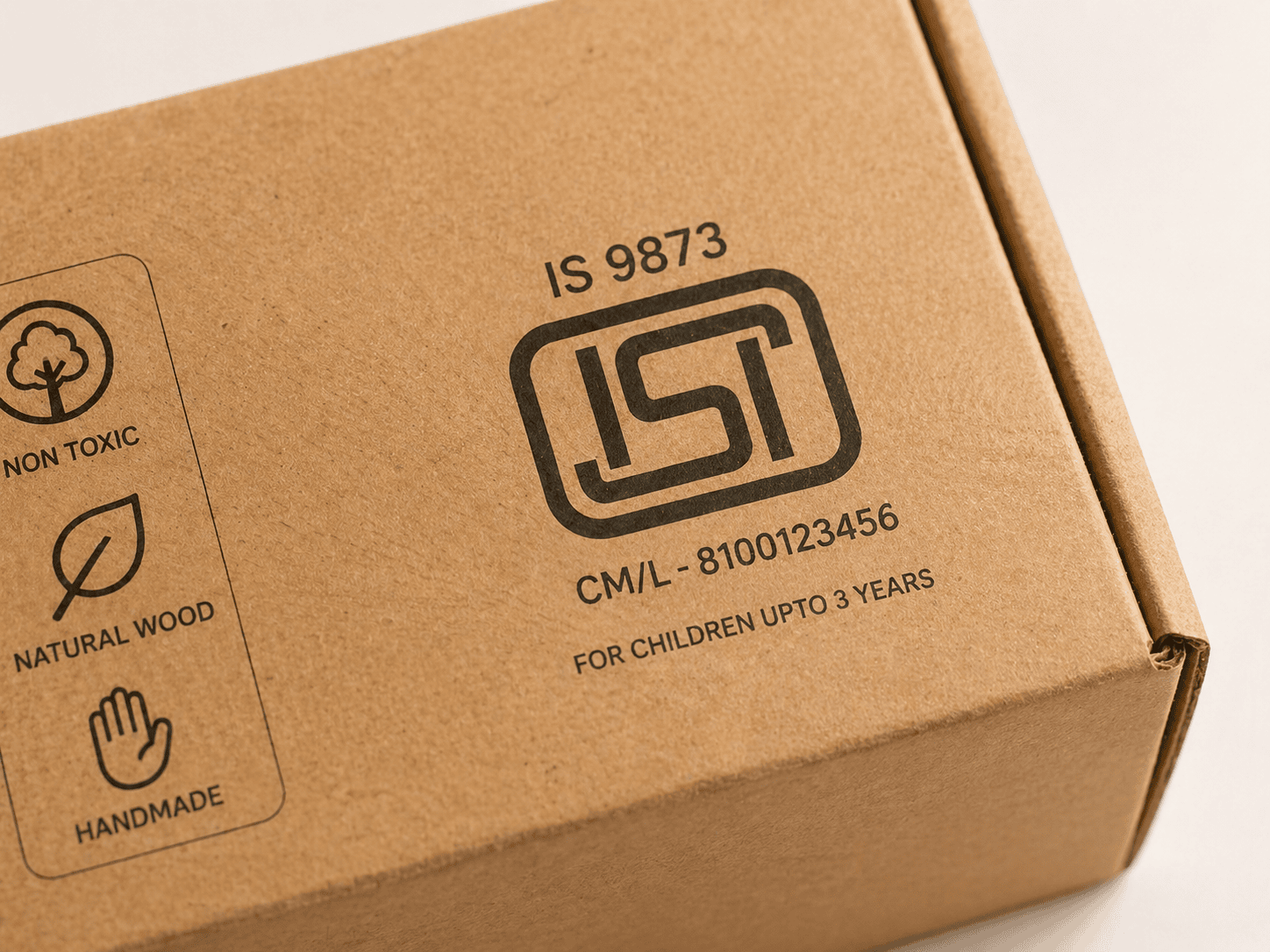
The ISI mark on a box can be printed by anyone with access to a printer. The CM/L licence number cannot be faked — at least, not without immediately detectable fraud.
Every manufacturer granted a BIS licence receives a unique CM/L number (typically seven to ten digits) that is specific to their factory and production line. This number is India's toy safety equivalent of a factory's Aadhaar card.
The 30-second verification process:
- Find the ISI mark on the packaging — it should display "IS 9873" or the relevant part number above or below the logo.
- Locate the CM/L number — it is printed directly below or beside the ISI logo, usually in small text.
- Download the BIS Care app (available free on Android and iOS, developed by the Government of India).
- Enter the CM/L number in the "Verify Storage/License" section.
- Confirm the result shows "Operative" and that the manufacturer name matches the brand on the box.
If the app shows "Expired," "Suspended," or a completely different factory name, do not give that toy to your child for mouthing play. This is especially important for toys purchased from third-party marketplace sellers on large e-commerce platforms, where counterfeit or grey-market products can appear alongside legitimate listings.
4.4 The Role of Third-Party Testing Laboratories
Behind the ISI mark are some of the world's most sophisticated testing facilities. When you request a safety report from AriroToys or Hape, you will see names like SGS, Intertek, or TUV on the documentation. These are the "invisible police" of the toy safety world.
SGS and Intertek are the two dominant global testing laboratories, with facilities in major Indian cities including Gurgaon, Bangalore, Tirupur, and Mumbai. TUV (Technischer Überwachungsverein) is the German standards body whose certification is particularly relevant for European-designed toys.
Reading a safety report: If a brand shares their test report with you — which you have every right to request — skip past the technical methodology sections and go directly to the conclusion. The conclusion must state "PASS" for all relevant parts of IS 9873. For heavy metal testing, look for results listed as "ND" — Not Detected. ND means that even the laboratory's most sensitive instruments, capable of detecting parts per billion, found no measurable quantity of the element. This is the highest achievable result.
Our curation philosophy at buysy.in: We actively request safety documentation from every brand we stock or recommend. We recognise that small artisan toy makers in India — the craftspeople of Channapatna, Kondapalli, and Saharanpur — produce objects of extraordinary beauty and cultural significance. We celebrate their work. But the economics of artisan production make comprehensive third-party testing unaffordable. A single SGS test run costs approximately ₹40,000 to ₹80,000 depending on scope. A small artisan cannot absorb this cost per batch. This is why our recommendations for active infant play are limited to brands that can demonstrate documented third-party verification — not because artisan toys are inherently unsafe, but because parents of infants deserve documented proof, not faith.
PART FIVE: Maintenance in Indian Conditions — Keeping Safe Toys Safe
A toy that passes every safety test on the day of purchase can become unsafe through improper maintenance. Indian home environments — extreme humidity, extreme heat, floor-based play culture, multi-child households — create specific maintenance requirements that generic toy care guides do not address.
5.1 The Oil Question: Factory Finish vs. Home Maintenance
This distinction confuses many parents, so let us be precise.
Factory finish (applied during manufacturing): Linseed oil is applied to the wood at the factory under controlled conditions. It polymerises — chemically hardens — to create a permanent protective film inside the wood fibres. This is a one-time process. You cannot replicate it at home. You are not supposed to.
Home maintenance oil (applied by parents every six months): The purpose of home oiling is to replenish surface moisture and prevent drying and cracking, particularly in low-humidity seasons. For this purpose, use cold-pressed food-grade coconut oil or food-grade mineral oil. Apply a small amount to a clean cloth and rub it into the wood surface. Wipe away any excess. Allow to dry in a ventilated area.
The rancidity warning: Do not use excess coconut oil or unrefined versions. In the heat of an Indian summer, excess oil trapped in wood pores can go rancid, producing an unpleasant odour and potentially creating an environment for bacterial growth. A thin, even coat is sufficient — you are moisturising the wood, not saturating it.
Frequency: Every six months for most Indian climates. Every four months for coastal high-humidity regions. Every four months for extreme dry-heat regions where cracking is a risk.
5.2 The Monsoon Storage Rules
The Indian monsoon is the ultimate test for wooden toys, and most families fail it in one of two ways: either they leave toys on the floor where they absorb moisture from sweating tiles, or they store them in airtight plastic bins where trapped moisture accelerates mould growth.
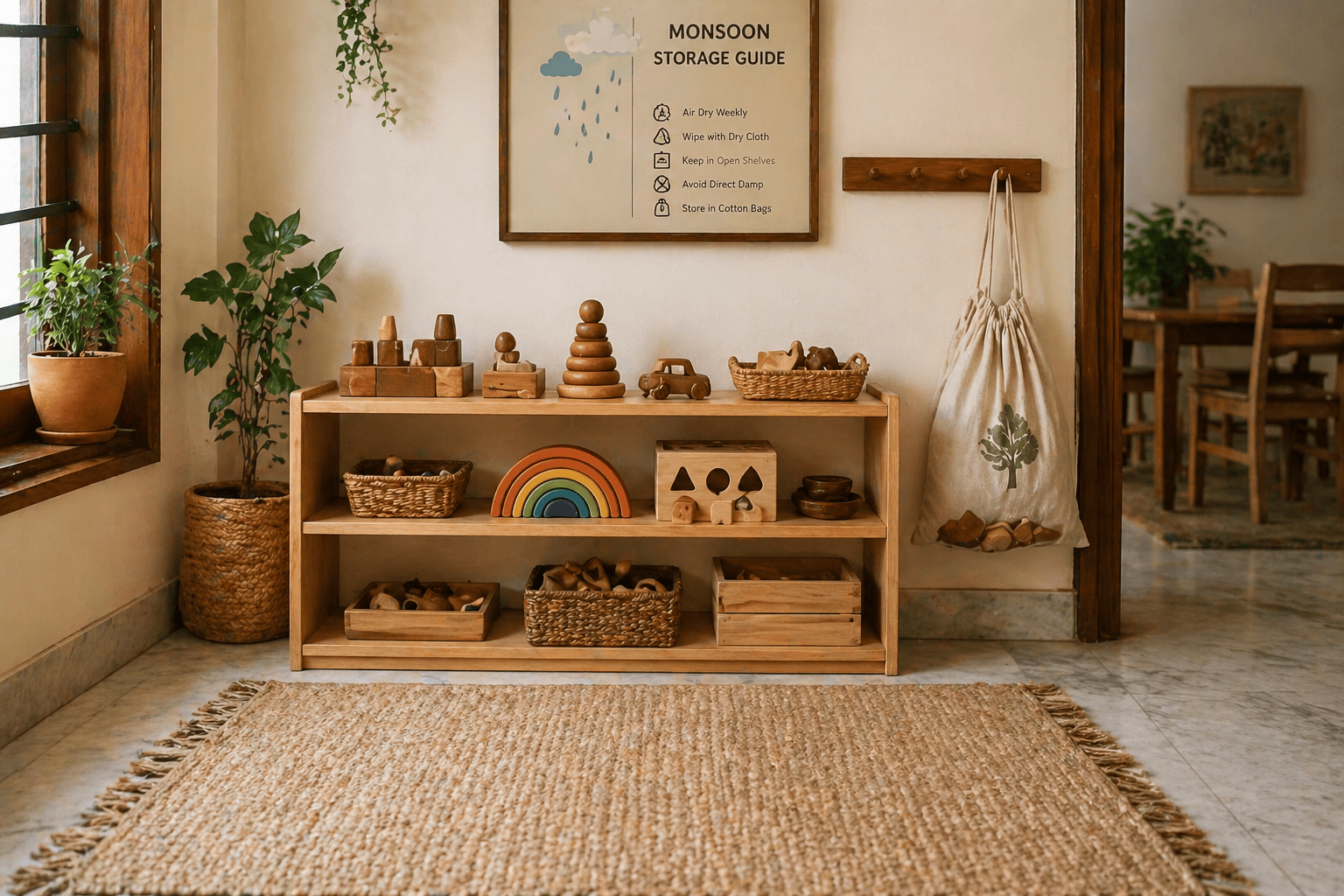
Both approaches are wrong.
Rule 1: Never store in airtight containers during monsoon. If there is even a trace of moisture on the surface of a toy — invisible to the eye, but present — an airtight environment creates a micro-greenhouse. Mould spores that would otherwise die in open air find a perfect warm, damp incubator. Use breathable storage instead: cotton drawstring bags, open wooden shelves, or natural wicker baskets. If you must use a plastic box, add two or three silica gel packets (kept safely out of reach of children) to absorb ambient moisture.
Rule 2: Elevate toys off the floor. Indian floors — marble, tile, and stone — are thermal masses. They absorb coolness and "sweat" condensation when warm, humid air contacts them. Placing wooden toys directly on a sweating floor exposes the base of the toy to concentrated moisture. Use a jute dhurrie, a cotton rug, or a foam mat as a buffer. This simple change prevents the majority of monsoon-related mould problems our customers report.
Rule 3: Indirect sunlight is your friend, direct harsh sun is your enemy. If a toy feels slightly damp or develops a musty smell during the monsoon, 20 to 30 minutes of indirect morning sunlight (before 10 AM) will dry it without causing damage. Avoid leaving toys in direct harsh afternoon sunlight (above 35°C) — this causes rapid moisture loss and can crack the wood surface, particularly on imports like beech.
5.3 The Indian Pest Guide: Termites and Wood Borers
Termites and wood-boring beetles are a reality in large parts of India, from the coastal regions to the dry interior plains. Plastic toys are immune to them. Wooden toys are not — but the vulnerability varies enormously by wood type.
Natural resistance ranking for Indian conditions:
- Neem — Termites actively avoid neem. The same azadirachtin compounds that give neem its antibacterial properties are a natural insect deterrent. Neem toys left on the floor of a termite-prone home are significantly safer than other wood types.
- Sheesham (Indian Rosewood) — Contains natural resins that termites find unpalatable. Excellent for large floor-based items like Pikler triangles.
- Teak — High natural oil content deters most insects.
- Rubberwood and Beech — Moderate natural resistance. Safe with proper storage.
- Pine — Minimal natural resistance. Pine is essentially a preferred food source for several termite species common in India. Avoid uncertified pine toys if your home has a history of termite activity.
The kiln-drying protection: High-quality brands use kiln-dried wood — wood that has been heated in a controlled oven to reduce moisture content below 10%. This process kills any insect larvae or eggs that may already be present inside the wood before manufacturing. It also removes the residual moisture that pests need to colonise new wood. When a brand specifies kiln-dried or seasoned wood, this is not just a quality claim — it is a pest prevention measure.
5.4 Cleaning Protocols for Indian Homes
Daily cleaning: Wipe with a cloth dampened in a 1:1 mixture of water and white vinegar. This combination cleans effectively and provides mild antibacterial action without harsh chemicals. Wipe dry immediately. Never leave wet wooden toys or stand them in pools of liquid.
After playdates: Wipe down any toys shared with other children. For neem wood toys, this is largely precautionary given their natural antibacterial properties. For rubberwood or beech toys, it is more important.
Do not:
- Submerge wooden toys in water
- Use harsh chemical cleaners, bleach, or disinfectant sprays directly on wood
- Put wooden toys in a dishwasher
- Use alcohol-based hand sanitiser on wooden surfaces (it strips the oil finish)
Sanitisation during illness: If a child has been unwell, wipe toys with the vinegar solution, dry thoroughly, and allow to air in indirect sunlight for several hours. This is sufficient for the level of sanitisation appropriate for household use.
PART SIX: The Value Economy — The Real Cost of Safety
6.1 The 5-Year Lifecycle Analysis
The ₹2,999 price point of a certified wooden walker produces genuine sticker shock in the Indian market. It should not, when you look at the actual numbers.
| Metric | Plastic Toy (₹950) | Certified Wooden Toy (₹2,999) |
|---|---|---|
| Initial purchase | ₹950 | ₹2,999 |
| Battery costs over 2 years | ₹600 (LR44/AA cells) | ₹0 |
| Typical lifespan | 6–12 months | 5–10 years |
| Replacements needed over 5 years | 2–3 units (₹1,900–₹2,850) | 0 |
| Resale value | ₹0 (no market for used plastic) | ₹1,500 (50–60% retained value) |
| Total effective cost over 5 years | ₹3,450+ | ₹1,499 |
The wooden toy is 57% cheaper over five years. It produces zero battery waste, zero plastic in landfill, and generates a positive resale return rather than a disposal problem.
6.2 The Resale Market: Wooden Toys as Assets
The second-hand market for certified wooden toys in India is active and growing. Parent-to-parent resale groups on Facebook, OLX listings, and Instagram selling pages for children's goods consistently show robust demand for brands like AriroToys, Shumee, and Hape. The reasons are straightforward: certified wooden toys remain structurally sound for years after purchase, and informed parents know what they are looking for.
Maximising resale value:
- Keep the original BIS-marked packaging. A toy in its original box with a visible CM/L number sells for 15–20% more than the same toy without packaging.
- Maintain the finish with regular oiling. A well-maintained toy shows its quality visually.
- Store the original warranty card and any safety documentation.
- Photograph the toy before use and after — buyers appreciate documented condition history.
A ₹2,999 AriroToys walker in good condition, with original packaging, typically fetches ₹1,600 to ₹2,000 on the Indian resale market after two years of normal use. This is not theory — this is what parents in our community consistently report from actual transactions.
PART SEVEN: The 25-Point Master Safety Audit
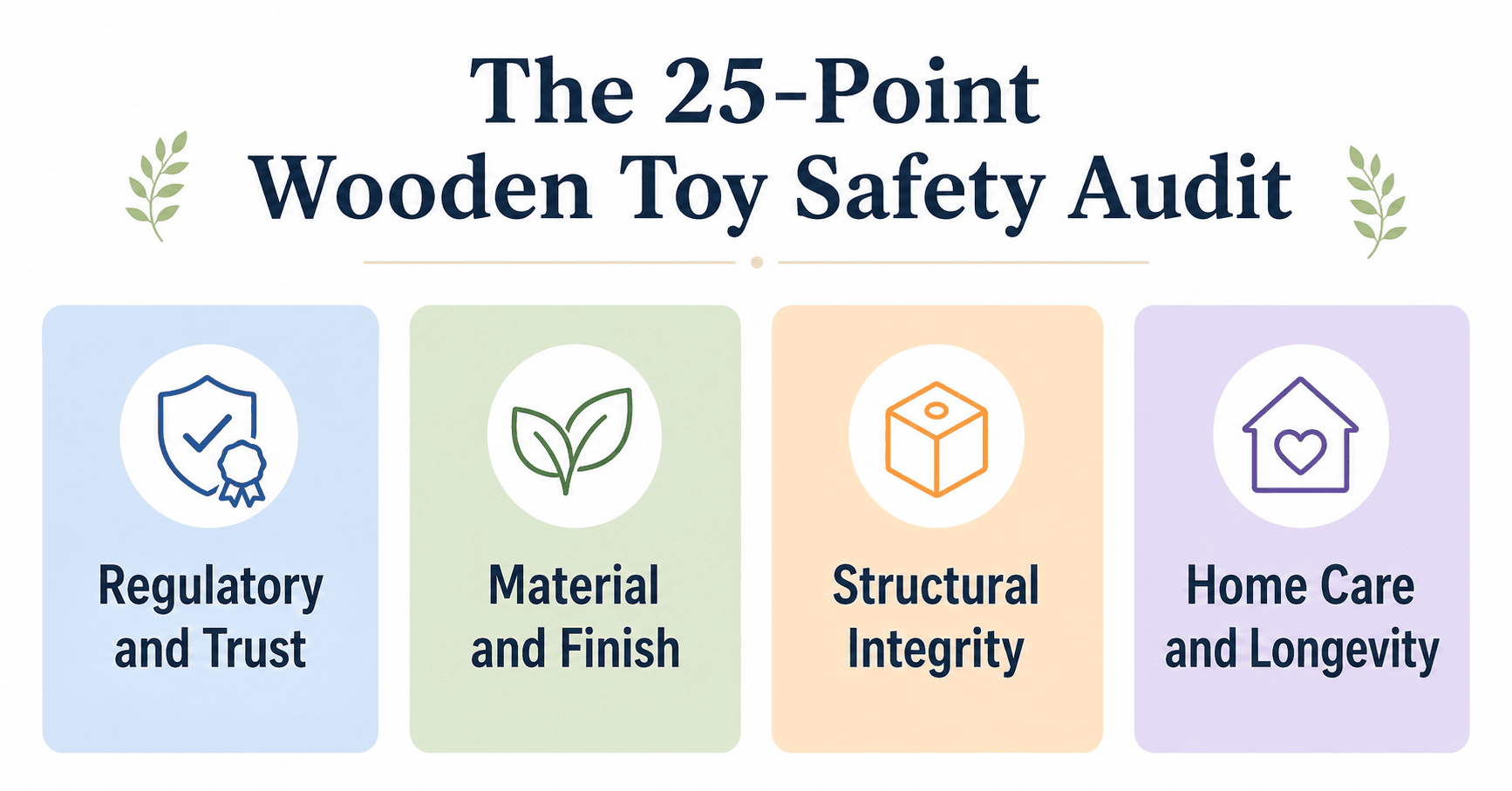
Before any wooden toy enters your home for a child under three years, run it through this checklist. A toy that passes all 25 points is among the safest playthings available anywhere in the world.
Part A: Regulatory and Trust (6 Points)
- [ ] 1. ISI mark is clearly visible on the packaging, not just on a sticker that could be added later.
- [ ] 2. CM/L licence number is printed on the packaging under or beside the ISI logo.
- [ ] 3. CM/L number shows "Operative" status when verified on the BIS Care app.
- [ ] 4. Manufacturer name shown in the BIS Care app matches the brand name on the packaging.
- [ ] 5. Brand can provide or link to a Statement of Compliance for IS 9873 Part 3 (heavy metal migration).
- [ ] 6. Age-grading label (e.g., "Suitable for 10 months+") is clearly displayed and matches your child's current developmental stage.
Part B: Material and Finish (7 Points)
- [ ] 7. Wood type is identified on packaging or product description (Neem, Rubberwood, Beech, etc.).
- [ ] 8. Wood type is appropriate for your regional climate (see Climate Map in Part Two).
- [ ] 9. Surface feels warm and natural to the touch, not glassy or plastic-like.
- [ ] 10. No strong chemical, paint, or solvent smell when opening the box.
- [ ] 11. Any colour on the toy appears absorbed into the wood (stain), not sitting on top as a thick paint layer.
- [ ] 12. Firm rubbing of the coloured surface with a fingernail releases no colour and produces no flaking.
- [ ] 13. Finish is explicitly described as food-grade, water-based, or natural oil on the brand's product page or packaging.
Part C: Structural Integrity (6 Points)
- [ ] 14. All edges and corners are visibly rounded — run your finger along every edge and corner to confirm no sharpness.
- [ ] 15. Construction uses no visible screws, nails, or metal staples that could loosen and become hazards.
- [ ] 16. For infants: No component of the toy fits entirely inside a standard 35mm film canister (approximate 31.7mm choking hazard cylinder).
- [ ] 17. Any moving part gaps (wheels, axle spaces, hinges) are either less than 5mm or greater than 12mm — gaps between 5mm and 12mm are finger-trap hazards.
- [ ] 18. Joint construction uses wooden dowels, mortise-and-tenon joinery, or similar mechanical joints rather than adhesive alone.
- [ ] 19. Brand provides drop-test certification results (IS 9873 Part 1) confirming the toy does not splinter or create small parts when dropped from high-chair height.
Part D: Home Care and Longevity (6 Points)
- [ ] 20. Wood is specified as kiln-dried or seasoned, indicating pest protection during manufacturing.
- [ ] 21. You have appropriate breathable storage for monsoon season (cotton bag, open shelf, or ventilated basket — not airtight plastic bin).
- [ ] 22. Play area has a rug, mat, or dhurrie as a barrier between toys and cold tile or stone floors during monsoon.
- [ ] 23. You have a schedule for checking toy surfaces for grain raise or splinters after the monsoon season (September–October inspection).
- [ ] 24. Food-grade maintenance oil (cold-pressed coconut oil or food-grade mineral oil) is available for six-monthly conditioning.
- [ ] 25. Original packaging is stored for eventual resale, including any warranty card and safety documentation.
Conclusion: Safety Is a Continuous Practice
Walking through a toy store armed with this knowledge is a different experience. The gap between a ₹200 street vendor rattle and a ₹1,200 certified neem wood rattle is no longer a mystery of marketing — it is a documented difference in wood species, finishing chemistry, regulatory compliance, and climate-specific durability.
The mother from Kochi who emailed us at the beginning of this journey made one storage mistake. Her toy was good. Her information was incomplete. That is the gap this guide is designed to close.
Choosing a wooden toy for your child is not a single decision — it is an ongoing practice of informed choices. The 25-point audit does not take long. The BIS Care app takes thirty seconds. The oil conditioning routine takes five minutes every six months. These are small investments of time that protect a significant investment of money and, more importantly, protect the safety of your child through their most formative years.
At buysy.in, we currently stock AriroToys because their commitment to neem wood, BIS certification, and Indian climate-appropriate design aligns with everything this guide recommends for the infant stage. We also respect the breadth and sustainability credentials of Shumee, and the international engineering quality of Hape. Our goal is never to sell you a specific brand. Our goal is to give you the knowledge to make the right choice for your child, your city, and your budget — whatever that choice turns out to be.
Research and Sources
- National Center for Biotechnology Information (NCBI): — documents the antimicrobial and antifungal properties of azadirachtin and nimbin compounds.
- Bureau of Indian Standards: IS 9873 Parts 1, 2, and 3 — the complete Indian toy safety regulatory framework.
- Association Montessori Internationale (AMI): Pedagogical guidelines on natural materials and developmentally appropriate play objects.
- Department for Promotion of Industry and Internal Trade (DPIIT): Mandatory BIS certification requirement notification, effective January 1, 2021.
- BIS Care App: Official Government of India tool for CM/L licence verification (available on Android and iOS).
Make Your Business Online By The Best No—Code & No—Plugin Solution In The Market.
30 Day Money-Back Guarantee
Say goodbye to your low online sales rate!